How to Select IBP Cables for ICU and Cath Lab Use
In ICU and cath lab settings, clinicians rely on continuous invasive blood pressure (IBP) monitoring to track arterial pressure waveforms and assess hemodynamic status, particularly when caring for critically ill or hemodynamically unstable patients.
Hospitals therefore need cables that match their installed monitors, pressure transducers, cleaning procedures, and working environment. This guide explains how procurement teams can compare IBP cables using practical, product-level information.

Key Selection Points
When selecting an IBP cable for ICU or cath lab use, buyers can focus on the following points:
- Verify cable compatibility with the exact monitor model, IBP module, and pressure transducer, including the connectors at both ends.
- Choose a cable length that suits the planned routing.
- Confirm the required pressure channel count and the cable configuration supported by the monitor or module.
- Review the jacket, connectors, strain relief, shielding, and cleaning instructions.
- Check product documentation, traceability, warranty, and applicable regulatory records.
- Evaluate samples with the hospital’s installed equipment before a larger purchase.
These checks help procurement teams compare products consistently while addressing clinical and biomedical engineering requirements.
What Is an IBP Cable?
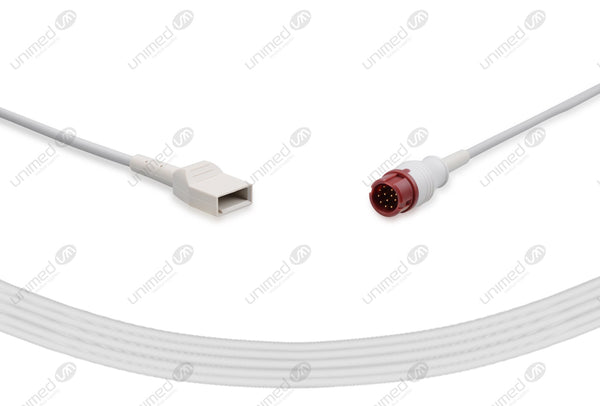
An IBP cable connects an invasive pressure transducer to a patient monitor. The transducer converts pressure changes in a fluid-filled monitoring system into electrical signals, which the cable carries to the monitor for display as pressure values and waveforms. Different cable configurations are available for specific monitor and transducer combinations.


The FDA-recognized ANSI/AAMI BP22 standard applies to blood pressure transducers, including cables. Its scope also identifies compatibility between the pressure transducer and monitor as an important consideration.
1. Confirm Monitor and Transducer Compatibility
Review compatibility first because an IBP adapter cable connects two separate devices. Procurement teams can begin with the monitor brand and then identify the exact monitor model or hemodynamic module.
Product descriptions such as “Philips compatible,” “GE compatible,” or “Mindray compatible” provide useful information about the intended monitor family. A detailed model list can then help buyers select the corresponding version.
The transducer connection also needs to be identified. Common product catalogs may include versions for Medex/Abbott, Edwards, BD, Utah, B. Braun, Argon, and other transducer systems.
Hospitals operating several monitor brands can create an internal compatibility list. This makes it easier to identify which cable belongs to each department, monitor family, and transducer type.
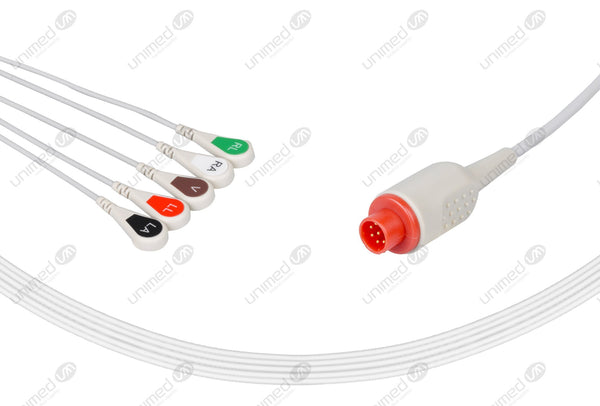
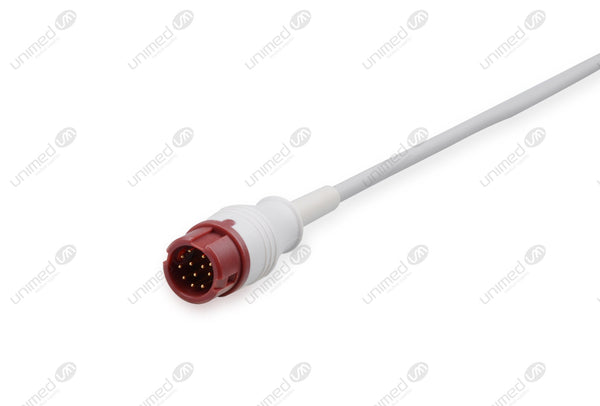
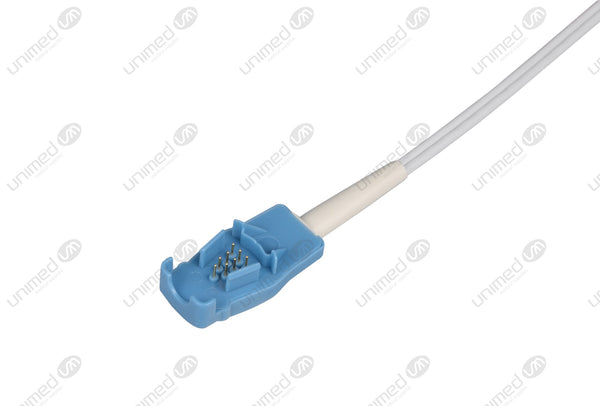
Color labels, part numbers, and connector photographs can also simplify storage and distribution. Clear identification is particularly helpful when ICU, operating room, and cath lab teams share a central accessories inventory.


2. Review Cable and Connector Construction
Reusable cables may be connected, repositioned, cleaned, and stored many times. Construction details can therefore influence daily handling and expected service life.
A procurement review can consider:
A flexible jacket can make routing easier around beds, equipment carts, and procedure tables. Molded strain relief supports the area where the cable enters the connector, where repeated bending may occur.
Shielding can help protect the pressure signal in environments containing several electrical devices. Hospitals can review the supplier’s technical information about shielding, electromagnetic compatibility, and intended monitor use.
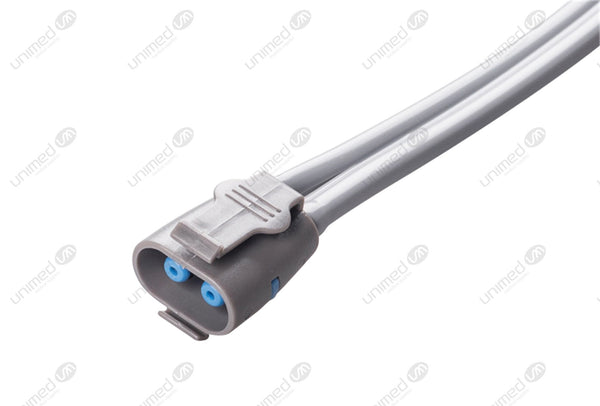
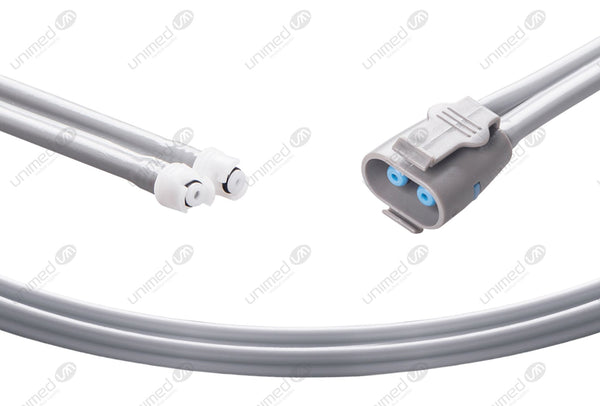
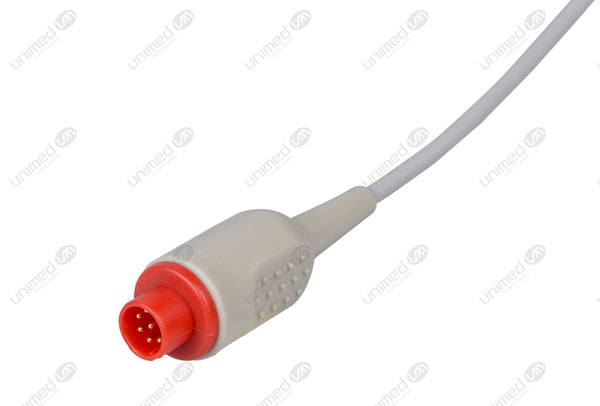
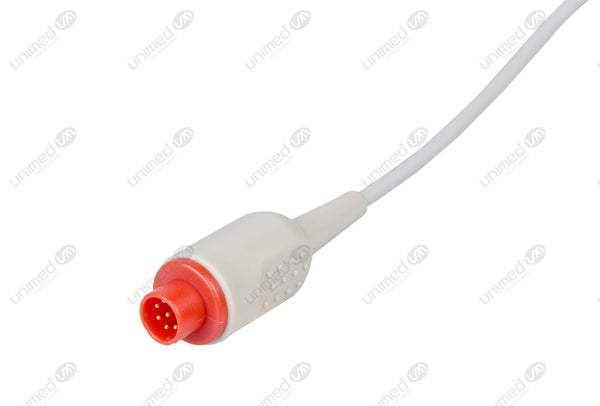
Connector design is also relevant. The connector needs to fit securely while remaining practical for trained staff to attach and remove. Clear orientation marks or color identification can help users recognize the correct pressure connection.
The current IEC 60601-2-34:2024 addresses the basic safety and essential performance of invasive blood pressure monitoring equipment. When reviewing regulatory and technical documentation, buyers can ask suppliers how the relevant requirements apply to the intended product and monitoring system.
3. Choose a Suitable Length and Channel Configuration
Cable length can be selected according to the distance between the transducer and monitor during normal use. The route can be measured with the bed or procedure table in its expected positions.
A cable that provides a reasonable working allowance can reduce tension on the connectors. At the same time, avoiding unnecessary cable length can support cleaner routing and reduce loops around bedside equipment.
Short converter cables may be useful when an existing cable system only needs a different interface. Longer IBP adapter cable configurations may be appropriate when the transducer connects directly to a monitor positioned farther from the patient.
Channel configuration is another practical consideration:
- A single-channel cable supports one pressure connection.
- A dual-channel cable can support two compatible pressure connections when the monitor or module is designed for that arrangement.
Procurement teams can confirm the required channel count with the ICU, cath lab, and biomedical engineering teams before ordering.
4. Consider ICU and Cath Lab Workflows
ICU and cath lab use share the same core compatibility requirements. Selection can then account for differences in cable handling and routing.
| Setting | Workflow Considerations | Selection Focus |
|---|---|---|
| ICU medical IBP monitoring | Patient repositioning, bedside equipment, and repeated cleaning | Cable flexibility, strain relief, secure connectors, suitable length, and cleaning compatibility |
| Cath lab procedures | Procedure-table movement, equipment placement, and pressure channel requirements | Suitable length, secure connectors, planned routing, and a channel configuration supported by the monitor or module |
Select the configuration based on the installed equipment and actual workflow, rather than the department name alone.
5. Check Cleaning and Material Information
Reusable cables are commonly disinfected between uses. The product instructions can identify suitable cleaning agents, cleaning methods, drying procedures, and any restrictions on immersion or sterilization.
Buyers can review whether the cable jacket and connector housing are suitable for the facility’s normal cleaning process. Smooth surfaces and molded construction may make routine wiping more practical.
Material documentation can include:
Routine inspection may cover the cable jacket, connector housing, contacts, and strain-relief areas. Hospitals can incorporate the manufacturer’s inspection and replacement guidance into their accessories management procedures.
6. Review Supplier and Product Documentation
Clear documentation helps procurement, clinical engineering, and end users confirm that they are selecting the same product configuration.
A product file may include:
- Technical specification sheet
- Monitor compatibility list
- OEM cross-reference
- Connector description or drawing
- Cable length and channel information
- Material declarations
- Cleaning instructions
- Lot or batch traceability
- Warranty terms
- Applicable regulatory documents
ISO 13485 documentation provides information about a manufacturer’s medical-device quality management system. Depending on the destination market, procurement teams may also review CE, FDA, or other applicable market documentation for the selected product.
The required records can vary by country, device classification, and hospital policy. Reviewing the current documents for the exact model can support purchasing and supplier qualification.
7. Evaluate Samples Before Wider Purchasing
Sample evaluation allows the hospital to review a proposed cable with its installed monitors and usual pressure transducers.
A practical assessment can include:
- Confirming the connector fit
- Checking that the monitor recognizes the pressure channel
- Completing zeroing according to the monitor and transducer instructions
- Observing a continuous waveform
- Reviewing connector retention during normal positioning
- Checking cable length and routing
- Reviewing cleaning and storage procedures
Clinical engineering, biomedical engineering, and end users can participate in the evaluation. Their feedback can help procurement teams compare compatibility, handling, documentation, and workflow suitability before approving a larger order.

IBP Cable Options from Unimed Medical
Unimed Medical has specialized in patient-monitoring accessories since its establishment in Shenzhen in 2004. Unimed’s IBP adapter cable and transducer portfolio includes configurations for monitoring platforms such as Philips, GE/Marquette, Mindray, Spacelabs, Siemens, Dräger, and Nihon Kohden.
The portfolio supports commonly used transducer interfaces, including Medex/Abbott, Edwards, BD, Utah, B. Braun, and Argon. Product pages provide compatible monitor models, OEM cross-references, connector types, dimensions, materials, and channel configurations.
Conclusion
A practical IBP cable selection process can combine compatibility, construction, length, channel count, cleaning requirements, documentation, and sample evaluation. Reviewing these factors against the hospital’s installed monitors and clinical workflow can support consistent purchasing for ICU and cath lab use.